Products


The vision for Slice is that every educator and every student, wherever they are, has access to the best image-based resources in biomedical and life sciences.
Over the last 14 years, contributions from universities and teaching hospitals around the world have helped grow Slice into a shared collection of almost 23,000 biomedical and life science images. By sharing teaching collections, institutions can access resources that complement their own materials, reduce unnecessary duplication of effort, and benefit from tools such as image annotation and interactive learning activities. This collaborative approach helps make high-quality educational resources more accessible to educators and students across the globe.
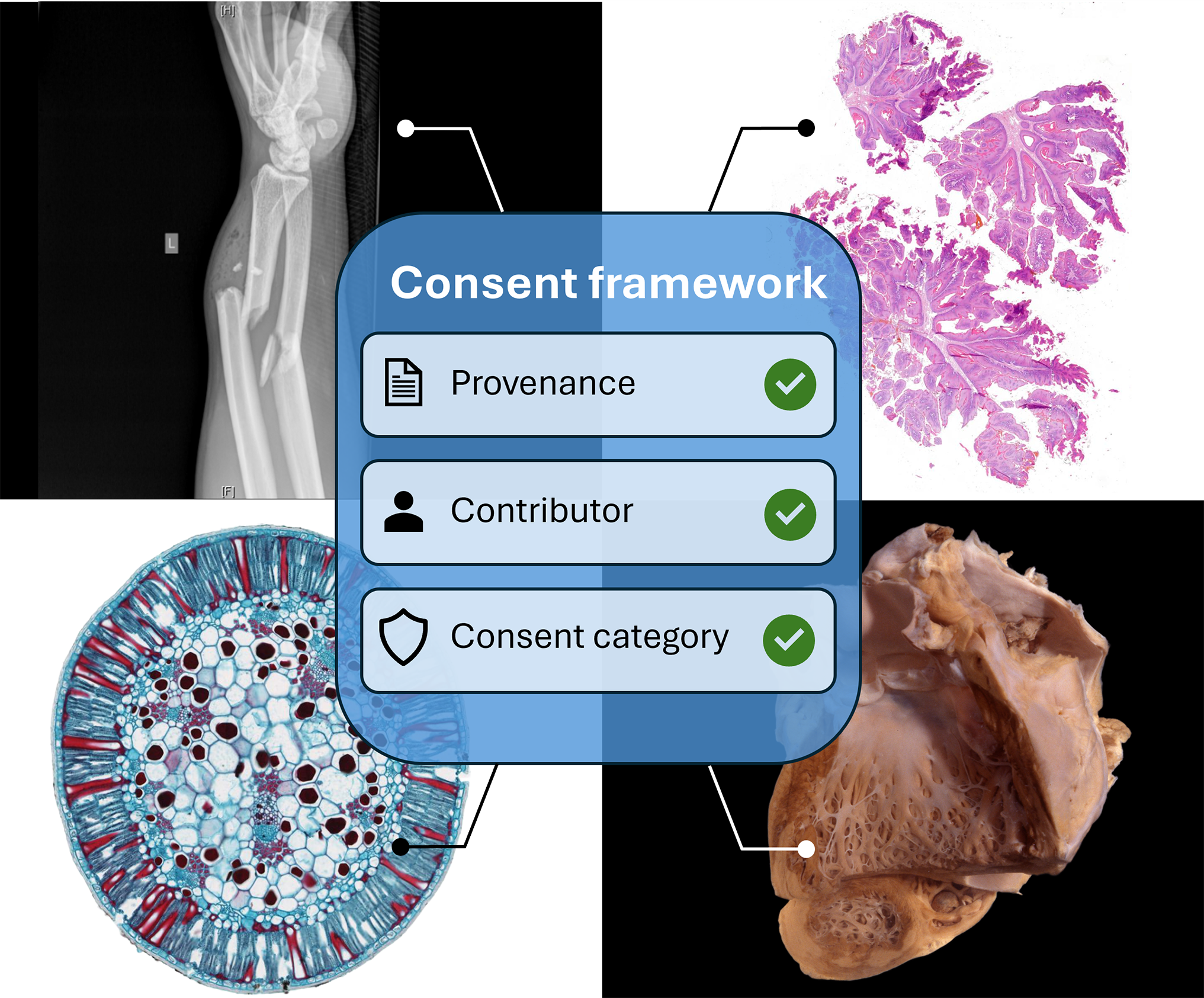
As Slice has grown, so too has the importance of providing clear information about the origins and use of the images within the collection. To support this, the BEST Network has introduced a new consent classification framework that provides additional context about the consent and authorisation associated with each image.
Slice hosts images from a wide variety of sources, including human, animal and plant material, as well as radiology, microscopy, pathology and anatomical collections. Because these collections have been developed by different institutions over many decades, the documentation associated with individual specimens and images can vary considerably.
In recent years, there has been increasing discussion within anatomy and health sciences education about the stewardship of teaching collections and the importance of understanding provenance and consent. In 2022, the American Association of Anatomists convened a Legacy Anatomical Collections Task Force to consider these issues in relation to legacy anatomical collections. The resulting recommendations were subsequently endorsed by the Association (doi:10.1002/ar.25410).
To align with these recommendations, and to support these further with local, contextual input, the BEST Network explored how best to provide consent information within Slice in a way that was practical, transparent and easy for contributors and users to understand. The result is a framework that allows collections to be classified consistently while still providing meaningful information about individual resources.
The aim is not to determine whether a collection should or should not be used, but to provide educators with additional context so they can make informed decisions that align with their own institutional policies and educational goals.
Following discussion amongst the BEST Network Management Committee starting in November 2025, consultation with some of our image contributors and review of current recommendations regarding legacy anatomical collections, four consent categories were developed to reflect the range of permissions and authorisations associated with material held in Slice.
These categories provide a practical and consistent approach to describing collections while recognising that documentation and consent practices have evolved considerably over time.
1. Explicit Informed Consent
Reflects permission for broad educational electronic use, ideally on an international basis.
2. Institutional Authorisation
Institutions provide permission for use despite the absence of explicit donor consent for global digital dissemination.
3. Legacy Collection
Historically significant materials where consent processes are unclear or absent but accepted for educational use under institutional governance and ethical oversight.
4. No consent required
Materials not originating from human or animal specimens, where consent requirements do not apply to educational dissemination.
It is important to note that the assigned category reflects information provided by the contributing institution. As a repository that aggregates material from multiple collections, the BEST Network is not able to collect or independently verify original consent documentation.
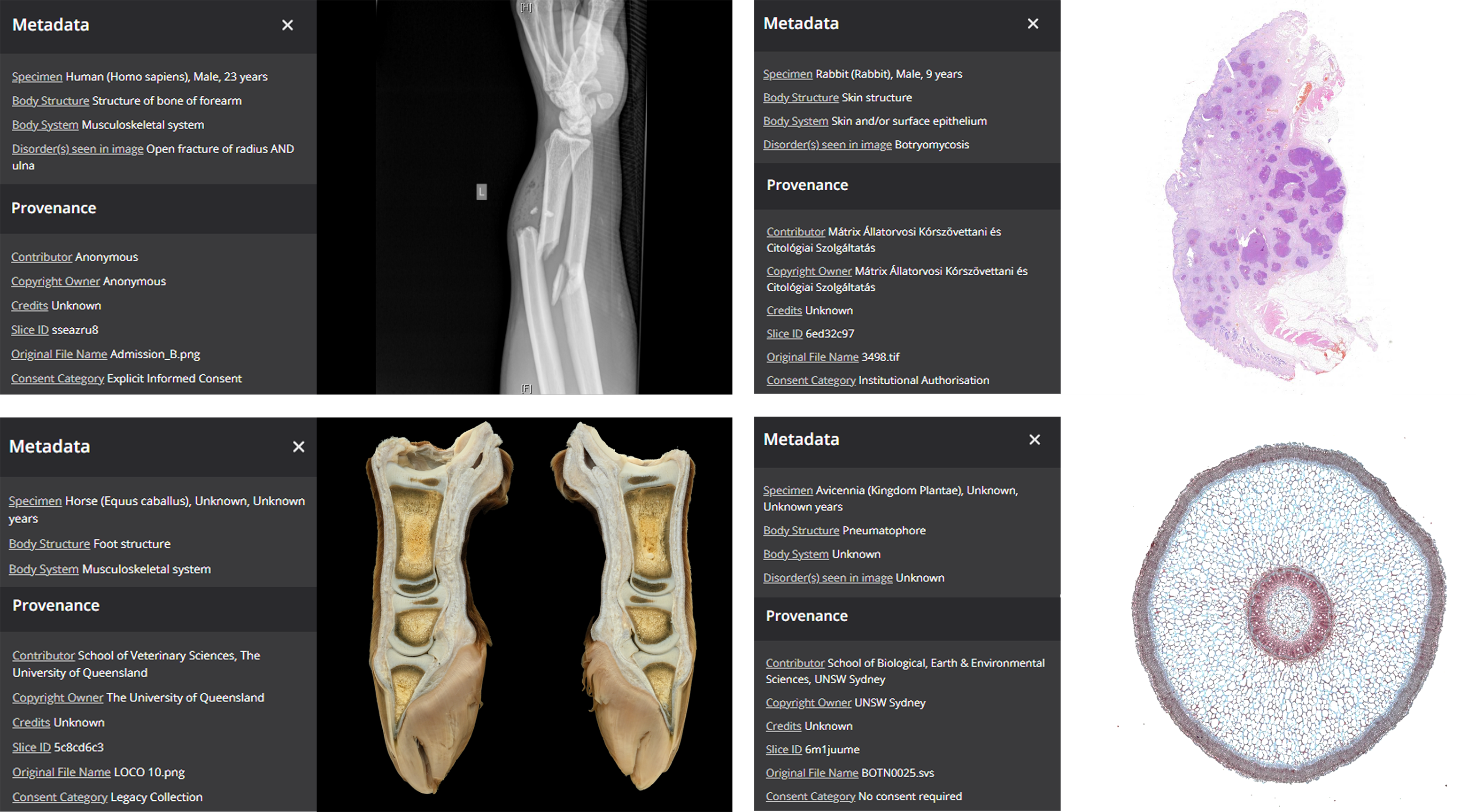
Consent information is now displayed in the Provenance section of each image record under the field Consent Category.
This information provides additional context about the image and complements existing provenance and attribution metadata. As contributor information continues to be reviewed and updated, additional images will be assigned consent categories over time.
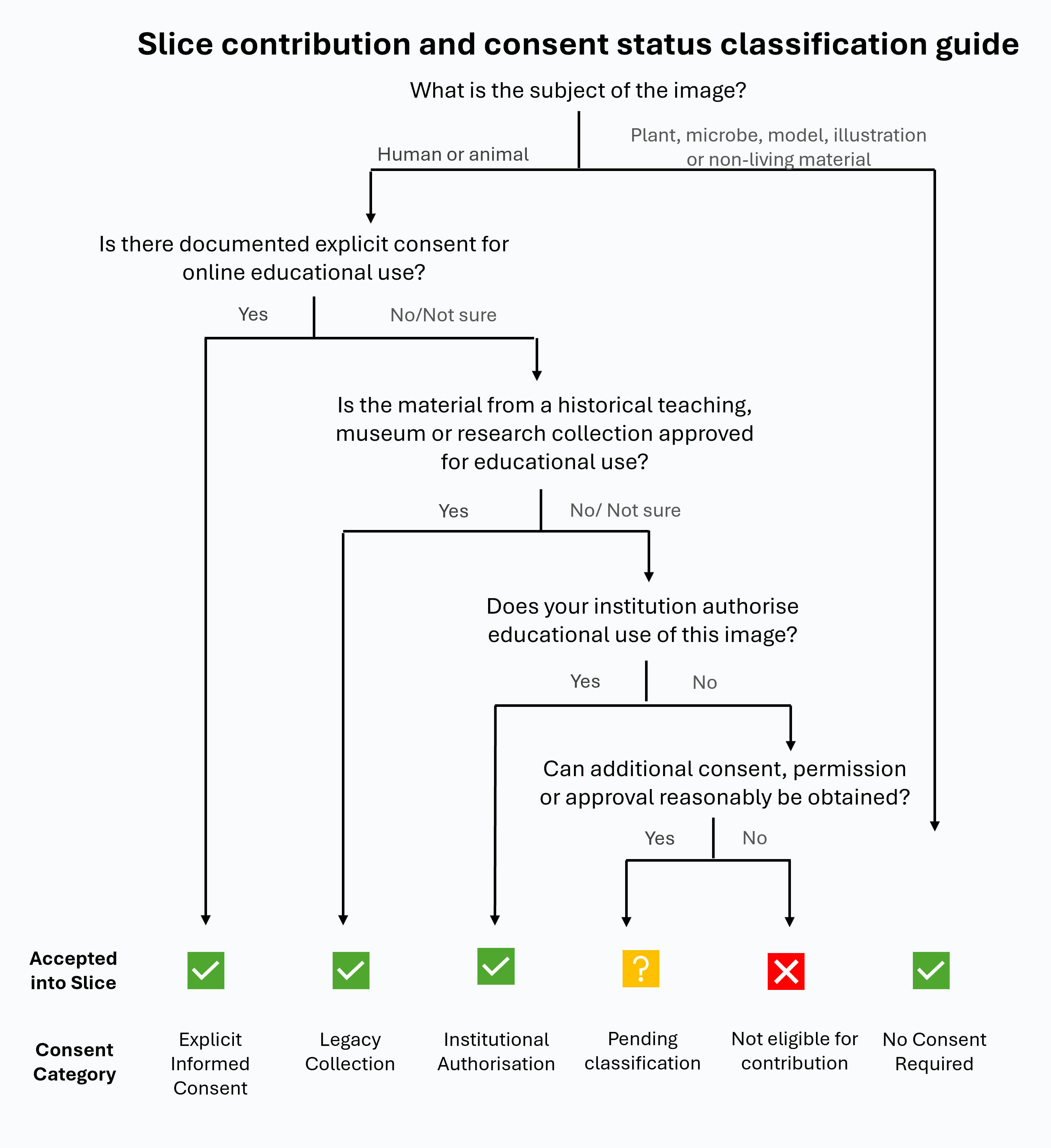
Introducing consent categories was only one part of the project. To support consistent classification of both existing and future contributions, we developed a practical decision-making framework that guides contributors through the classification process.
The framework helps contributors determine the most appropriate consent category based on factors such as the source of the image, the availability of documented consent and the authorisation provided by the contributing institution.
By providing a clear and consistent pathway for classification, the framework supports both transparency and ongoing growth of the collection while recognising the diverse origins of educational resources.
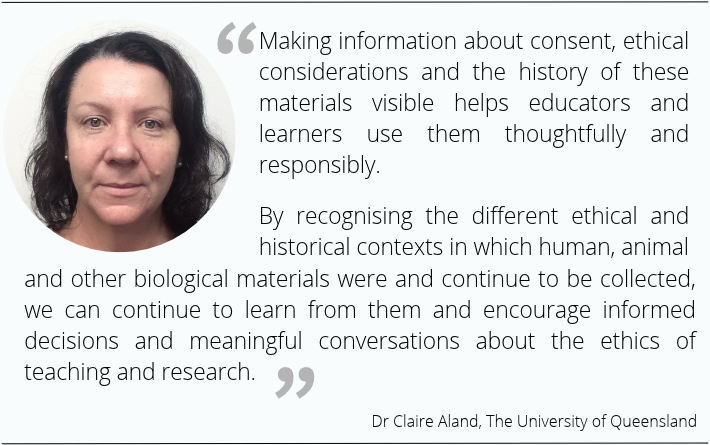
This work has been driven by Dr Claire Aland (The University of Queensland), who has led the development and implementation of the consent classification framework within Slice. Her work has helped translate recommendations around stewardship and legacy collections into a practical approach that can be applied within a large, internationally shared educational repository.
For Claire, the value of the project extends beyond recording metadata.
The framework has also informed discussions with students and educators about the history, stewardship and ethical use of teaching collections, reflecting broader conversations taking place across anatomy and health science education.
This work was presented by Dr Claire Aland as part of the Ethics, Law and Medical Humanities Symposium at the IFAA Congress in Melbourne in August 2026.
The introduction of consent categories represents an important step in the ongoing development of Slice. As a living framework, it will continue to be updated in response to academic and community guidance. While teaching collections reflect different historical contexts and documentation practices, providing transparent information about provenance and consent allows educators to make informed choices about the resources they use.
By continuing to share high-quality teaching materials between institutions, Slice supports equitable access to educational resources while fostering responsible stewardship of the collections that underpin anatomy, pathology and biomedical science education.
References:
Cornwall, J., Champney, T.H., de la Cova, C., Hall, D., Hildebrandt, S., Mussell, J.C., Winkelmann, A. and DeLeon, V.B. (2024). American Association for Anatomy recommendations for the management of legacy anatomical collections. The Anatomical Record, 307(8), pp.2787–2815. doi:10.1002/ar.25410.
Aland, R. C. (2026, August 16). Ethical stewardship in using legacy histology collections in teaching [Symposium presentation]. Congress of the International Federation of Associations of Anatomists 2026, Melbourne, VIC, Australia. Abstract book
